

[News Space=Reporter seungwon lee] Bukwang Pharmaceutical has finalized a contract to acquire Korea Union Pharmaceutical, currently undergoing rehabilitation proceedings, for 30 billion won, making a bold move that will increase production capacity by approximately 30% and significantly strengthen its portfolio centered on antibiotics and injectables. The deal is believed to reflect OCI Group's strategic intent to increase its market share to over 17% and foster pharmaceuticals and biotechnology as new growth engines.
Stalking Horse M&A Structure
The merger and acquisition between Bukwang Pharmaceutical and Korea Union Pharmaceutical was designed using the "stalking horse" method. This method is a smart safeguard for M&A used in corporate rehabilitation or bankruptcy proceedings. Simply put, it involves pre-selecting a potential buyer, signing a contract, and then seeking better terms through open bidding. This method offers a double-edged sword, maximizing the likelihood of a successful deal while simultaneously securing the highest price.
The term "stalking horse" originates from the practice of stalking prey while hiding behind a hunting dog. In M&A, the initial acquisition candidate acts as the "stalking horse," proposing a base price and paving the way for the "real hunter" to emerge with a better offer in a subsequent public bidding.
In other words, the process of selecting Bukwang Pharmaceutical as the preferred bidder on December 17, 2025, and then confirming the final bidder when no competitors emerged by the 30th, as in the case of its acquisition of Korea Union Pharmaceutical, is a typical stalking horse pattern. Korea Union Pharmaceutical filed for rehabilitation proceedings on September 9, 2025, received a preservation order, and on September 16, the Seoul Rehabilitation Court issued a decision to initiate rehabilitation proceedings, placing it under court receivership.
The court approved the conclusion of a conditional investment agreement with Bukwang Pharmaceutical as the prospective acquirer on December 17, 2025, and confirmed Bukwang Pharmaceutical as the final prospective acquirer on the 30th of the same month in the absence of additional competitive offers following the M&A bidding deadline.
In accordance with the stalking horse structure, Bukwang Pharmaceuticals presented the pre-suggested terms (KRW 30 billion investment, 100% paid-in capital increase acquisition, etc.) as the base price, and as no competitor made a more favorable offer, the contract terms were finalized as is.
The acquisition will be via a third-party allocation paid-in capital increase. The issued shares will be registered common stock. The total acquisition price is KRW 30 billion, of which KRW 3 billion, or 10%, has already been paid as a down payment. The balance must be deposited in an account designated by Korea Union Pharmaceuticals no later than five business days prior to the meeting of stakeholders to approve the rehabilitation plan. The detailed timeline is subject to change depending on the submission of the rehabilitation plan (scheduled for January 15, 2026) and the schedule of the meeting of stakeholders.
Both Bukwang Pharmaceutical and Korea Union Pharmaceutical stated in their public disclosures and press releases that "the final acquisition price may change depending on the rehabilitation process," leaving open the possibility of some adjustments to the terms during future creditor consultations and court hearings.
Production capacity up 30%·Liquid injection 'leverage'
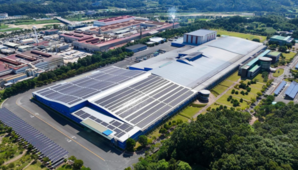
The primary goals of this acquisition are to expand production capacity and diversify its formulation portfolio. While Bukwang Pharmaceutical has traditionally focused on solid dosage forms, the acquisition of Korea Union Pharmaceutical will allow it to secure production lines for antibiotics and injectables, particularly liquid injectables, thereby broadening its manufacturing portfolio.
Bukwang Pharmaceutical said, “Through the acquisition of Korea Union Pharmaceutical, we will strengthen our factory production capacity, increasing our overall pharmaceutical production capacity by approximately 30%,” and emphasized, “Korea Union Pharmaceutical’s liquid injection production facility can produce more than twice as much as Bukwang Pharmaceutical’s existing facility, which will greatly enhance our competitiveness in the injection field.”
This expansion strategy coincides with the company's full-scale investment in facility investment funds raised through a paid-in capital increase with shareholder allocation of approximately KRW 100 billion in 2025.
Bukwang Pharmaceutical announced its intention to acquire a factory and enter the contract development and manufacturing organization (CDMO) business for synthetic pharmaceuticals through a paid-in capital increase. This M&A serves as an expansion strategy, further securing additional injectable and antibiotic manufacturing infrastructure. The company expects the enhanced production capacity to provide direct leverage for its future expansion of its lineup of chronic disease treatments, focusing on prescription-only (ETC) drugs.
Union Pharmaceutical, in recovery, faces court receivership risks and challenges in its turnaround
Since the initiation of rehabilitation proceedings, Korea Union Pharmaceutical has faced criticism for its deteriorating financial health, with sales plummeting, operating losses widening, and research and development contracting. As of 2025, Korea Union Pharmaceutical's sales had halved compared to before rehabilitation, and accumulated deficits raised concerns about capital erosion, raising warnings about its ability to sustain management.
The Seoul Rehabilitation Court has requested the submission of a rehabilitation plan by December 18, 2025, following a claim reporting and investigation period. It has been emphasized that the company could face a crossroads of normalization or liquidation, depending on whether the plan is submitted within the deadline and whether creditors agree. In this context, the infusion of 30 billion won in new capital into the Bukwang Pharmaceutical and OCI system is considered a key variable in increasing the likelihood of the rehabilitation plan's implementation.
However, during the process of reviewing and deciding on the rehabilitation plan, specific normalization measures such as the scale of debt adjustment, facility and personnel restructuring, and sales network reorganization must be designed. Furthermore, the extent to which the "experience of turning a loss-making company into a profit" mentioned by Bukwang Pharmaceutical's management can be translated into actual management improvements will be a key point of observation that will determine the company's future success or failure.
OCI-Bukwang-Union: A Vertically Integrated Management Structure
This transaction reflects OCI Group's mid- to long-term governance strategy to focus on pharmaceuticals and biotechnology as new growth engines. In February 2022, OCI acquired approximately 7.73 million shares of Bukwang Pharmaceutical for KRW 146.1 billion, securing an approximately 11% stake and becoming the largest shareholder. The Bukwang family's stake has decreased from the low 20% range to around 10%.
In July 2025, OCI Holdings invested KRW 26.8 billion in a paid-in capital increase of Bukwang Pharmaceutical, acquiring approximately 9.07 million new shares and increasing its stake from 11.3% to 17.05%, strengthening its "effective control." OCI Holdings, which is required by the Monopoly Regulation and Fair Trade Act to hold a minimum 30% stake in a listed subsidiary, faces the task of acquiring additional Bukwang Pharmaceutical shares by 2025 or 2026.
As of 2025, OCI Holdings' stake in Bukwang Pharmaceutical remains at around 17%, and analysis suggests that it needs to purchase at least 10% more to meet regulatory requirements.
OCI's strategy to meet the holding company requirements by increasing its stake in affiliates and Bukwang Pharmaceutical's large-scale capital increase and M&A activities are forming a mutually complementary structure, supporting the group's expansion of its pharmaceutical and bio portfolio.
If the structure is simplified through this acquisition of Union Pharmaceutical, a vertical chain structure of 'OCI Holdings (holding company) → Bukwang Pharmaceutical (listed pharmaceutical company) → Korea Union Pharmaceutical (rehabilitation company, future subsidiary)' will be formed.
Strategic implications and future variables
A pharmaceutical industry expert evaluated, "This deal, which connects OCI-Bukwang Pharmaceutical-Korea Union Pharmaceutical, is interpreted as a strategic move aimed at strengthening production capacity and portfolio in the short term, and expanding CDMO and chronic disease treatment in the mid to long term." He added, "From OCI's perspective, it has diversified its portfolio by adding pharmaceuticals and bio to its chemical and energy-centered business structure, and has established a bridgehead for expanding M&A and contract manufacturing businesses by using Bukwang Pharmaceutical as a pharmaceutical platform within the group.
Bukwang Pharmaceutical is leveraging OCI's capital to simultaneously expand its production facilities and acquire rehabilitated companies. It is also strengthening its CDMO and specialty pharmaceutical pipelines, while aiming to expand its long-term pipeline and product line in the chronic disease sector.
However, the normalization of management of Korea Union Pharmaceutical, which is currently undergoing rehabilitation proceedings, whether OCI Holdings will meet its 30% stake in Bukwang Pharmaceutical, and the controversy over the dilution of stock price and shareholder value following Bukwang Pharmaceutical's paid-in capital increase remain as risk factors that the market will pay attention to in the future.