


[News Space=Reporter seungwon lee] As the prosecution is seeking a four-year prison sentence and a fine of 500 million won for Samhyo Group Chairman Jeong Do-won in connection with the Yangju quarry collapse, the first accident under the Act on the Punishment of Serious Disasters, the business, labor, and legal communities are all on edge ahead of the sentencing in February 2026.
Since the enactment of the Serious Disaster Punishment Act, suspended sentences have become the mainstream in many cases, and whether the court will hand down the first prison sentence to a "general management officer" is expected to be a watershed moment that will determine the direction of domestic industrial safety regulations for the next several years.
The Truth Behind the Yangju Accident, the First Case of the "Severe Accidents Act"
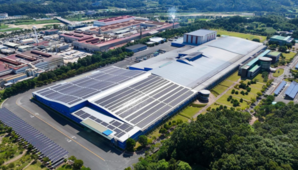
The Yangju Quarry Collapse occurred at approximately 10:08 a.m. on January 29, 2022, at the Sampyo Industries Yangju Plant quarry in Yangju, Gyeonggi Province. During drilling operations for aggregate extraction, the upper sludge (rock and soil) storage area collapsed, instantly burying two drills and one excavator, and three workers were crushed to death.
This accident occurred just two days after the Act on the Punishment, etc. of Serious Disasters (the Act on the Punishment, etc. of Serious Disasters) was implemented for workplaces with 50 or more employees, and was recorded as the ‘first accident under the Act on the Punishment, etc. of Serious Disasters.’
According to an investigation by the Ministry of Employment and Labor and media reports, the sludge storage area at the accident site was structurally at high risk of collapse, yet it had been congested for a long time. Signs of partial collapse were detected four days prior to the accident. While cracking and encroachment risks had been repeatedly raised at the same site in the past, systematic safety measures, such as sludge disposal plans and slope stability assessments, were inadequate.
Prosecutors: "Management Chose Quarry Volume Over Safety"
At the final trial held on December 19, 2025, by the Uijeongbu District Court's Criminal Division 3, the prosecution sought a four-year prison sentence and a fine of 500 million won for Chairman Jeong Do-won, who was indicted on charges of violating the Act on the Punishment, etc. of Serious Disasters. The prosecution argued that Chairman Jeong, as he received reports on all aspects of management, including safety and health-related matters at the group level, and provided specific instructions, constituted a "manager" responsible for establishing a safety and health management system for Sampyo Industries' Yangju Quarry.
The prosecution stated, "Sampyo's management prioritized economic gains, such as achieving the target quarry volume, overseeing sludge accumulation and potential collapse, despite the risk of collapse being reasonably foreseeable." The prosecution defined the absence of a safety and health management system tailored to the specific site as a serious violation. The prosecution sought a three-year prison sentence for former Sampyo Industry CEO Lee Jong-shin, two to three years in prison for the Chief Safety and Health Officer (CSO) and the Yangju Plant Manager, and a fine of 500 million won for Sampyo Industry.
Defense attorney: "The CEO's involvement is to set the direction...not to be the head of management."
Chairman Jeong Do-won's side emphasized the argument that Chairman Jeong cannot be considered a "manager" under the Act on the Punishment, etc. of Serious Disasters. The defense team countered that Chairman Jeong's review and briefing on the group's safety and health policy ahead of the enforcement of the Act was merely "the scope of the typical role society expects of a large corporation's CEO," and that the notion that he personally makes individual safety decisions at approximately 80 business sites nationwide is unrealistic.
The defense also strongly disagreed with the prosecution's recognition of the elements of "foreseeability" and "neglect," arguing that "the possibility of the sludge dump's collapse was not specifically pointed out in the expert investigation, and the small-scale collapse that occurred just before the accident was not directly reported to Chairman Chung." In his final statement, Chairman Chung stated, "Regardless of legal liability, I feel a heavy sense of responsibility as the group owner who failed to protect the lives of workers," and "I will make the completion of a group-wide safety system my final mission."
Three Years After the Serious Disaster Punishment Act: Statistics Reveal the Reality of Sentencing
The Serious Industrial Accident Punishment Act stipulates that managers who fail to fulfill their safety and health obligations in the event of a serious industrial accident, such as a fatality, are subject to imprisonment of at least one year or a fine of up to 1 billion won. Corporations are subject to a fine of up to 5 billion won. Based on first-instance judgments handed down between January 2022 and September 2025, which took effect in January 2022 and are compiled by the Ministry of Employment and Labor and media reports, more than 60 of the approximately 70 cases resulted in guilty verdicts.
However, there are many who point out that the actual sentencing has been significantly lenient. According to an analysis by the legal and consulting industry as of the end of 2024, only four cases (mostly 1-2 years) were sentenced to prison in cases related to the Serious Disaster Punishment Act. Around 20 cases resulted in suspended prison sentences, 2-3 cases resulted in fines, and 2-6 cases resulted in acquittals. An interim report released by the Ministry of Employment and Labor in December 2025 also found that out of 71 cases, 55 resulted in suspended prison sentences, 3 resulted in fines, and 6 resulted in acquittals, reiterating the assessment that actual prison sentences leading to detention are extremely rare.
The legal and labor circles have pointed out that the current 'judicial reality under the Aggravated Punishment Act' is that, despite the statutory provision for a minimum sentence of one year or more, the court overwhelmingly chooses suspended sentences after considering factors such as "the specific position and level of involvement of the manager, the formal existence of a safety management system, and efforts to prevent recurrence.
Expected Sentencing Scenarios: Prison for the CEO or Probation?
However, legal professionals and industrial safety experts are focusing on the Yangju Quarry case, which is considered the first symbolic case under the Serious Accident Punishment Act, as a potential "reference ruling" that will establish new sentencing guidelines. In particular, the prosecution's decision to indict the group chairman, rather than the head of an affiliate, as the "manager" and to seek a four-year sentence marks a stark departure from the existing structure, which has focused criminal responsibility on site managers or corporations in many cases.
At this point, based on the opinions of legal experts and their combined outlook on the ruling, the prevailing view is that the court will likely recognize Chairman Chung's "management responsibility" but will likely choose a sentence of "2-3 years in prison, suspended sentence" after considering whether it is his first offense and subsequent measures such as expanded safety investment and compensation for the bereaved family.
However, if the structural risks of the sludge dump site and the repeated warnings and warning signs collapse are judged to be directly contrary to the legislative intent of the Act on the Punishment of Serious Disasters, many believe that it is difficult to rule out the possibility of sentencing the case to a certain period of imprisonment, considering that this is a symbolic first case.
A law firm specializing in major disasters stated in an analysis report, "If the Yangju Quarry case doesn't result in a prison sentence for the management officer, the preventive effect and normative power of the Serious Disaster Punishment Act will be significantly weakened." The report concluded, "This will be a 'touchstone ruling' that could influence future discussions on constitutional petitions and constitutional review.
Business and labor circles are keeping an eye on the "day of destiny" on February 10, 2026
The court set the sentencing date for Chairman Jeong Do-won and others as February 10, 2026, but it's reported that the date may be adjusted due to circumstances such as court personnel changes. The business community is concerned that "uncertainty is growing over the extent to which executives' criminal liability will extend," and that the risk premium for large-scale project investments and high-risk ventures could increase further.
On the other hand, labor groups and industrial accident victims' groups called for strong punishment, saying, "Even after the implementation of the Serious Accident Punishment Act, worker deaths have not decreased, and in a reality where actual arrests and imprisonment cases are extremely rare, the Yangju Quarry incident is close to the last opportunity to send a firm message to 'management that prioritizes profit over life.'"
Regardless of the court's decision, this ruling is expected to be a decisive watershed moment, shaping the level of safety investment in Korean industrial sites, management's risk management strategies, and the direction of discussions on revising the Serious Accident Punishment Act for years to come.